
A Linked Source Is Not a Checked Claim: How Consultants Can Verify Research Before It Reaches the Client
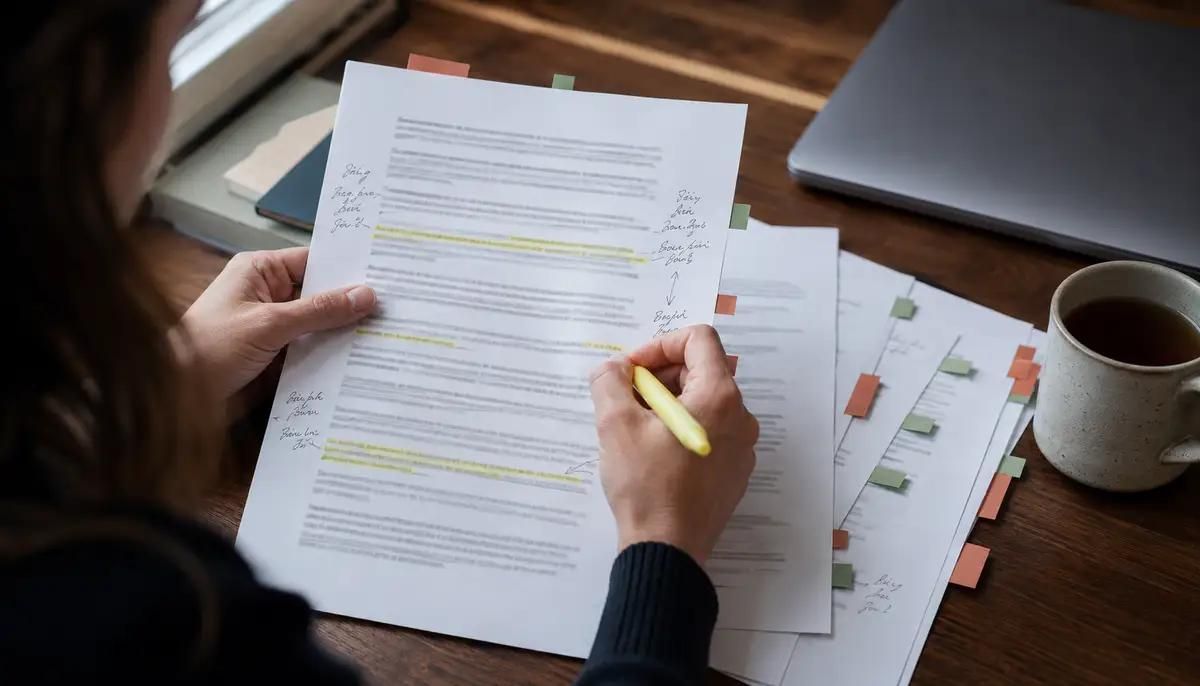
A consulting presentation can contain dozens of footnotes, links, and references and still have a fundamental research problem: the sources may not support the claims they are attached to. A report might cite a reputable industry publication, a government dataset, or a respected research firm, yet the specific figure or conclusion on the slide may tell a different story from the underlying evidence.
This distinction matters because clients rarely evaluate every source in a presentation themselves. They rely on consultants to interpret information, identify relevant evidence, and turn that evidence into conclusions they can use. When a recommendation is based on an unsupported claim, the problem can extend beyond an inaccurate slide. It can influence investment decisions, market-entry strategies, resource allocation, and the way leadership understands a business problem.
The presence of a citation creates a useful starting point for review, but it is not proof that a claim is correct. A link may lead to a genuine source without supporting the statement beside it. A report may discuss the right industry but use a different geography, period, or definition. An AI-generated summary may reference a real publication while attributing a conclusion that the publication never reached.
For consulting teams, research quality therefore requires more than collecting sources. It requires checking the relationship between each important claim and the evidence used to support it. That relationship is where a credible deliverable becomes a defensible one.
Why Having a Source Is Not the Same as Verifying a Claim
Citations serve an important purpose. They allow a reviewer to trace a statement back to its origin, examine the supporting evidence, and understand where a conclusion came from. However, the existence of a reference does not establish that the reference is relevant, current, or sufficient.
Consider a presentation that states, “The regional market is growing rapidly,” with a link to an industry report. The report may genuinely describe growth in the broader industry, but the slide may refer to a narrower product category or a different geographic market. The citation is real, yet the conclusion may be broader than the available evidence permits.
A similar issue occurs when a source reports an association but a presentation describes it as a cause. A survey might show that organisations using a particular technology also report higher productivity. That does not automatically establish that the technology caused the improvement. Other factors, such as company size, management practices, or existing capabilities, may contribute to the result.
These distinctions are easy to overlook when research is assembled under tight deadlines. A source is found, a useful sentence is extracted, and the statement moves into a slide. The more polished the presentation becomes, the easier it can be to assume that the supporting research has already been checked.
The solution is to review the claim itself rather than treating the citation as a completed quality-control step.
Five Checks Every Important Research Claim Should Pass
Not every sentence in a consulting presentation requires the same level of scrutiny. A minor contextual observation may carry less risk than a market-size estimate or a finding that directly supports a strategic recommendation. The depth of verification should reflect the importance of the claim and the consequences of getting it wrong.
1. Confirm That the Source Exists and Is Accessible
Start with the original source wherever possible. Open the link, confirm that the document is available, and check that its title, publisher, publication date, and relevant content match the reference in the presentation.
Search-result snippets, summaries, and references copied from another document can be useful discovery tools, but they should not replace direct review when the claim matters to a client decision. A URL may have changed, a page may have been removed, or a secondary article may describe a study inaccurately.
For an important quantitative claim, locate the original report, dataset, filing, or research publication. If only a secondary source is available, record that limitation and determine whether it is sufficient for the purpose of the analysis.
A source that cannot be located should not be treated as verified merely because its citation looks plausible.
2. Check Whether the Source Supports the Exact Statement
The next step is to find the specific passage, table, chart, or dataset that supports the claim. Reading only the headline or abstract may not be enough, particularly when a report contains multiple findings or uses definitions that differ from those in the presentation.
Suppose a slide states that a particular customer segment accounts for 40% of demand. The source might actually report that the segment represents 40% of survey respondents, not 40% of total market demand. Both figures could be legitimate within their original context, but they answer different questions.
Consultants should therefore compare the wording of the claim with the evidence itself. Does the source directly establish the statement? Does it support only part of it? Is the slide presenting an interpretation that goes beyond the source?
If the evidence is narrower than the claim, the wording should be narrowed. If the source does not support the claim, the team should find stronger evidence or remove the statement.
3. Verify the Date, Geography, and Definitions
Many research errors are not caused by fabricated information. They arise because accurate information is used outside the context in which it was collected.
A revenue figure from one financial year may be presented as a current estimate. A global statistic may be applied to India or another specific market. A report may define a customer as an active paying account, while a presentation uses the term to mean every registered user.
These differences can materially change the interpretation of the data. Before accepting a claim, check the reporting period, geographic scope, population or sample, units of measurement, and definitions used by the source.
This is particularly important when several sources are combined. Two reports may appear to contradict each other because they measure different populations or use different methodologies. Conversely, they may appear consistent while relying on definitions that are not directly comparable.
When the available evidence does not match the scope of the claim, explain the limitation instead of silently treating the figures as interchangeable.
4. Distinguish Evidence From Interpretation
Consulting work involves more than repeating what sources say. Consultants interpret evidence, compare competing explanations, and develop recommendations. The challenge is to make clear where the source ends and the team's own reasoning begins.
A report might show that customer churn increased during a particular period. That is an observation. Concluding that a pricing change caused the increase is a separate interpretation that requires additional evidence.
A strong deliverable makes this distinction visible. It identifies what the data establishes, what the team infers from it, and what remains uncertain. When multiple explanations are plausible, the analysis should consider them rather than presenting the preferred interpretation as an established fact.
This discipline does not make recommendations weaker. It makes them easier to evaluate and helps clients understand which conclusions are strongly supported and which depend on assumptions that may need further testing.
5. Make the Evidence Easy for Another Reviewer to Reproduce
A claim is easier to trust when a reviewer can trace it without repeating the entire research process. The source should be identifiable, the relevant passage or data point should be recorded, and any transformation or calculation should be explainable.
For quantitative analysis, retain the underlying data, the calculation method, and any assumptions that affect the result. For qualitative findings, record the relevant passage and the context in which it appears. If the team uses a secondary source because the original material is unavailable, make that distinction clear.
The objective is not to create unnecessary documentation for every sentence. It is to preserve enough evidence for another team member to understand how a significant conclusion was reached and to identify where further verification is needed.
How Unsupported Claims Enter Otherwise Good Consulting Work
Research problems rarely appear only at the end of an engagement. They can enter the workflow at several stages, often through ordinary working practices that seem efficient in isolation.
Search Results Can Be Mistaken for Evidence
Search engines help consultants discover relevant publications, but a search snippet may omit qualifications, describe a finding incompletely, or reflect an outdated version of a page. Copying a figure directly from a snippet can introduce an error before the source has even been reviewed.
A better workflow uses search results to identify potential sources, then opens the underlying material and verifies the relevant statement. The discovery process and the verification process should be treated as separate activities.
Secondary Sources Can Change the Meaning of a Finding
Industry articles and summaries are useful for finding developments quickly. However, they may compress a detailed study into a short headline, omit methodological limitations, or emphasise a result that was not the main conclusion of the original research.
When a claim is important to the recommendation, consultants should follow the reference back to the original report or dataset where practical. If that is not possible, the team should assess whether the secondary source provides enough detail to justify the claim.
AI-Generated Research Can Sound More Certain Than It Is
AI tools can help summarise documents, organise research questions, and identify potential sources. They can also produce fluent statements that appear more definitive than the available evidence warrants. In some cases, a citation may exist but fail to support the claim attributed to it.
A 2025 study published in Nature Communications examined source support in AI-generated responses to medical questions and found that valid source links did not guarantee that the cited sources supported the associated claims. The research was specific to its medical question dataset, so its results should not be treated as a measured error rate for consulting. However, it illustrates an important distinction: finding a valid source and verifying what that source establishes are separate tasks.
AI-generated citations, summaries, and research notes should therefore be treated as inputs to a verification process, not as proof that the work is complete. Consultants remain responsible for checking the underlying evidence before relying on it in client deliverables.
Time Pressure Can Turn Assumptions Into Facts
As a presentation deadline approaches, teams may prioritise completing the storyline and formatting the slides. A claim that initially appeared tentative can become more definitive through successive edits, while its original qualification disappears.
A simple review step can prevent this. Before finalising the deck, revisit the most important figures, market claims, and statements that directly support the recommendation. Check whether the final wording remains faithful to the underlying evidence, not merely whether a footnote is present.
A Practical Five-Claim Audit Before Client Delivery
Consulting teams do not always have time to recheck every reference from the beginning. A targeted audit can help focus attention on claims that matter most to the client's decision.
Step 1: Select the Five Claims That Carry the Most Weight
Identify the statements that are most likely to influence the recommendation or be repeated by the client in a leadership meeting. These may include the market-size estimate, the main growth driver, the strongest competitor comparison, a significant financial figure, or the finding that justifies a proposed investment.
The purpose is to prioritise consequential claims rather than select five statements at random. If a claim is central to the recommendation, it deserves stronger verification than a minor piece of background context.
Step 2: Open the Original Source
For each claim, locate the underlying publication, dataset, filing, or document. Confirm that the reference is accessible and that it corresponds to the source described in the slide.
If the team cannot find the original source, record the issue rather than treating the citation as verified. Decide whether another credible source can establish the same point or whether the claim needs to be revised.
Step 3: Locate the Supporting Evidence
Find the exact passage, table, figure, or data point. Compare it with the claim on the slide and check whether the wording accurately represents what the evidence says.
If the source supports a narrower conclusion, adjust the claim. If the evidence is ambiguous, preserve that uncertainty. If the evidence does not support the statement, remove it or replace it with a claim that can be substantiated.
Step 4: Record Limitations and Assumptions
Note the reporting period, geography, definition, or methodological limitation that affects interpretation. If the team has made a calculation or inference, record how it was derived.
This information does not always need to appear in full on the slide. It should, however, be available to the reviewer so that the team can explain the reasoning behind the conclusion.
Step 5: Assign an Explicit Review Status
Use a small set of consistent statuses, such as verified, needs revision, or unresolved. The status should reflect the relationship between the claim and its evidence, not merely whether someone has opened the link.
A verified claim is one for which the source and supporting evidence have been checked. A claim needing revision may have a valid source but overly broad wording. An unresolved claim lacks sufficient evidence and should not be presented as established until the issue is addressed.
This lightweight process creates a clear record of what has been checked and what still needs attention before the deliverable is sent.
Building Source Verification Into the Consulting Workflow
The strongest quality-control process is one that happens throughout the engagement rather than being added as a final step.
When research begins, teams can maintain a source log containing the claim, source title, URL, publication date, relevant passage or data point, and reviewer status. For quantitative work, the log can also identify the calculation or assumption used to transform the original data.
As the storyline develops, the team can review whether the evidence still supports the evolving argument. This matters because claims often change during slide editing: a cautious observation may become a stronger conclusion, or a finding that applied to one segment may be generalised to the whole market.
Clear ownership helps as well. The person who prepares a slide should identify the source and explain the reasoning, while a reviewer should independently assess whether the evidence supports the conclusion. For particularly consequential claims, relying only on the original author's interpretation can leave the same assumption unchallenged.
Teams can also build reusable verification checklists and establish minimum standards for source quality. These standards might specify when an original source is required, how to document calculations, and how to label estimates or unresolved assumptions.
The aim is not to make research slower through excessive process. It is to identify problems while they are still easy to correct, rather than discovering them when a client questions the recommendation.
What Better Verification Means for AI-Assisted Consulting
As consulting teams use AI for research, synthesis, and drafting, the amount of material that can be produced in a short time may increase. That makes the distinction between producing an answer and verifying an answer more important.
An AI tool can help identify potential sources, extract relevant passages, compare documents, and prepare an initial evidence table. Those capabilities can reduce repetitive work, but the output still needs to be assessed against the question the team is trying to answer.
A useful workflow separates three activities: generating a candidate claim, locating evidence that may support it, and checking whether the evidence actually justifies the claim. Keeping these activities distinct makes it easier to identify unsupported conclusions and prevents fluent wording from being mistaken for verified research.
Human review should focus on the areas where context and judgment matter most: whether the source is authoritative for the question, whether definitions align, whether the conclusion overstates the evidence, and whether important caveats have been omitted. If a claim cannot be substantiated, the appropriate response is to revise it, investigate further, or remove it.
AI-assisted research is most useful when it helps consultants spend less time on repetitive discovery and more time evaluating evidence, testing assumptions, and making sound judgments. Speed is valuable, but it does not replace the need for a defensible conclusion.
Conclusion: Make Every Important Claim Earn Its Place
A consulting deliverable should not be considered well-researched simply because its slides contain citations. The real test is whether the evidence supports the claims, whether the context has been preserved, and whether another reviewer can follow the reasoning behind the conclusion.
That requires a deliberate process: verify the source, locate the supporting evidence, check dates and definitions, distinguish facts from interpretations, and retain a traceable record of significant findings. The amount of review should reflect the importance of the claim and the decision it supports.
For consulting teams using AI-assisted research, the same standard applies. A valid link is useful, but it does not establish that the cited source supports the generated statement. Human review and a clear evidence trail remain essential to producing work that clients can scrutinise and use confidently.
Before the next deck goes out, select five claims that matter most to the recommendation. Open the sources, check the exact evidence, and revise anything that goes beyond what the material establishes.
A linked source is not a checked claim. The difference is the verification that happens between the two.
Get new posts and free tools
Join the list: one email when we publish. No spam.